-Main.svg)
Key Takeaways:
- Implement authentication technologies, trademarks, and legal actions to safeguard products and maintain consumer trust against counterfeiting threats.
- Raise awareness about counterfeit risks, provide verification methods, and encourage direct purchases to ensure authenticity of product and brand credibility.
- Monitor distribution channels, collaborate with trusted partners, and use blockchain or serialization to track and prevent counterfeit infiltration.
Fraud and fake products have been a significant threat to businesses worldwide. What is counterfeiting? It is the manufacturing and marketing of counterfeit products that resemble original branded products to deceive buyers. The establishment of e-commerce platforms and social commerce has greatly increased the prevalence of online counterfeits, making them harder for brands to detect.
The impact of counterfeiting extends beyond lost revenue to ruined brand integrity, compromised safety, and reduced growth prospects. To mitigate these risks, an organized campaign of anti-counterfeiting should be taken, which should involve monitoring, enforcing, technology, and awareness of the consumers to sustain long-term brand value.
What is Counterfeiting?
Counterfeiting is the unlicensed copying of branded products, wraps, or trademarks to deceive customers. The monetary profit of fraud is the main aim, and it is frequently compromised by quality and safety.
The Basics: Why Counterfeiting Happens
The demand of consumers, laxity in enforcement, and low cost of production contribute to the flourishing of counterfeiting. Sellers of fake goods on the internet cash in on price-sensitive shoppers and the lack of effective verification.
How Counterfeiting Affects Different Industries?
- Luxury Goods Lose Brand Erosion and Exclusive Status
The falsehood of luxury goods decreases both the sense of value and individuality and diminishes brand image and customer readiness to pay high prices.
- Pharmaceuticals Are Facing Significant Health Hazards
Counterfeit medicines can be composed of wrong or unhealthy substances, and this has caused failure in treatment, severe life-threatening health issues, or death.
- Electronics May Malfunction and Burn
Fake electronic devices are usually not subject to quality control, and thus, there is a high possibility of overheating, short-circuiting, and electrical fire.
- Automotive Parts Augment Accident and Liability Risks
Nominal automotive parts undermine automotive safety and increase the chances of mechanical breakdown, accidents, and legal liability on the part of the manufacturer.
The Rise of Online Counterfeit Markets
The OECD and EUIPO reports indicate that digital platforms have considerably enhanced the distribution of online counterfeit products in the world. The existence of social trade and cross-border sellers makes the process of detection complicated.
How Big Is the Counterfeiting Problem in India?
India has experienced an extensive increase in fake products both within e-commerce platforms and informal supply chains, as well as on social commerce platforms. Products of fake electronics, medicines, clothing, and FMCGs are becoming widespread in online sales, and consumers cannot understand which products are genuine and which are fake.
The Department of Promotion of Industry and Internal Trade claims in its reports that the online counterfeit trade hurts tax revenue, consumer safety, and healthy competition. It also undermines domestic production because it enables the illegal merchants to lower the prices of the legitimate brands.
With the growth of the digital shopping sector in India, it has become necessary to detect and manage the online fake listings. Companies that want to become big should invest in monitoring, enforcement, and consumer awareness so as to safeguard trust and future expansion in the market.
Why Should You Actively Fight Counterfeiting?
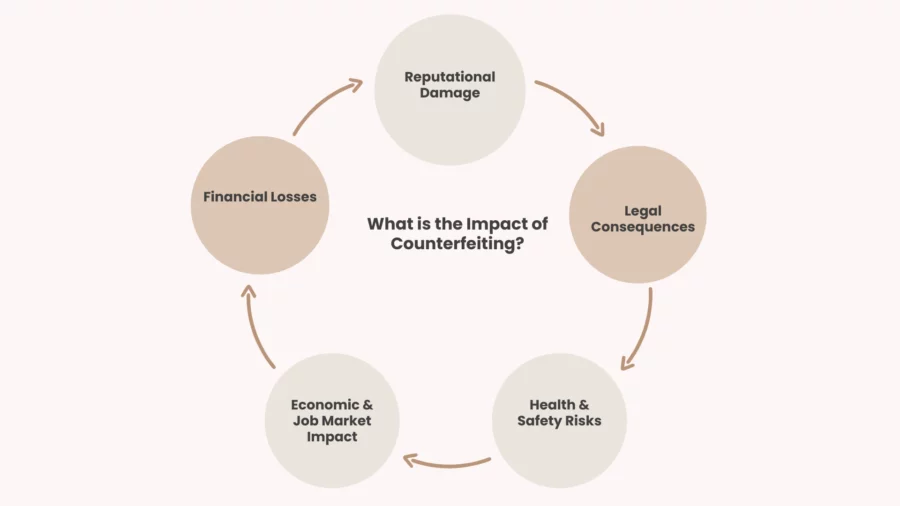
The negligence of counterfeiting causes compounded damage in all business functions.
- Loss of Revenue Due to Absence of Sales: Fake products drive away the business to the authentic products, and this directly lowers the sales and drains the long-term revenue lines.
- More Risks to Safety and Compliance: Counterfeits do not comply with the quality standards of regulation, which puts brands at risk of legal actions, recalls, and lawsuits.
- Negative brand reputation: Unfavorable experiences with fake products are readily linked to the original brand, which harms the credibility and perception of the brand in the long run.
- There is a Loss of Consumer Trust and Loyalty: when customers come across fake products, trust in the brand dwindles, and this diminishes repeat purchases and loyalty.
- Poor Relationships With Distributors and Partners: Authorized supply chains are disrupted by counterfeiting, which creates differences with trusted distributors and retail partners.
- Obstacles to Global Market Expansion: The level of counterfeiting reduces the brand credibility of international markets, and therefore, international expansion becomes trickier and expensive.
The effect of counterfeiting is more resistant to reversal in the case of prolonged action.
6 Proven Strategies to Overcome Counterfeiting
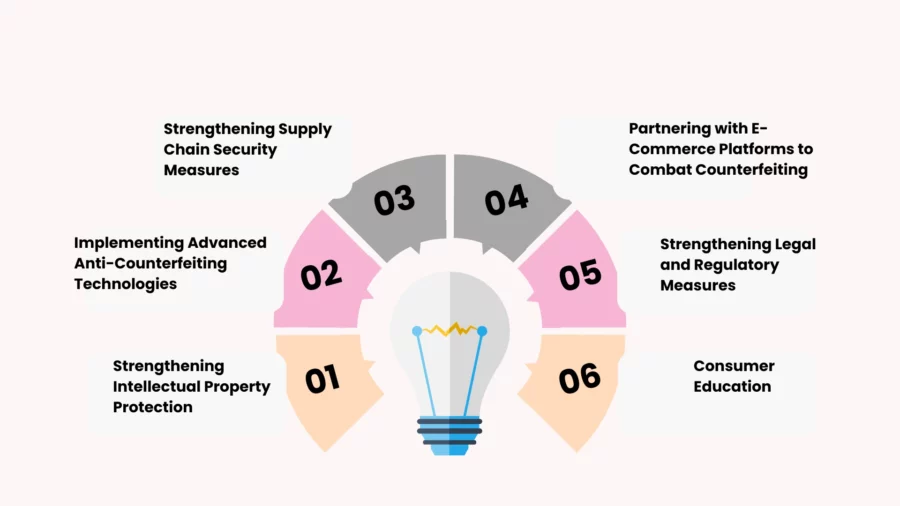
- Continuous Online Monitoring & Takedown
False sellers often change locations and identities of sellers to escape detection. A constant examination of websites, online stores, and social sites assists in detecting counterfeit listings at the initial level. Takedowns decrease the visibility of products, decrease sales, and deny online counterfeit goods the chance to spread among customers.
- Trademark & Intellectual Property Enforcement
The protection of intellectual property is accurate and enables brands to take decisive action against counterfeiters. The process of trademark and copyright registration will provide the legal rights of ownership and expediency across jurisdictions. IP enforcement is also a cornerstone of anti-counterfeiting tools, particularly in conjunction with platform reporting and legal escalation.
- Supply Chain Authentication Measures
The weak supply chain points are often used as the point of entry for counterfeiting. Strict procurement of raw materials, supplier auditing, and product serialization are some of the methods used to ensure authenticity at all levels. These steps minimize the possibility of counterfeit parts entering the production or inventory process and enhance support with back-tracing.
- Customer Awareness Campaigns
The more educated consumers will not buy fake products. The brands need to give specific instructions on how to verify authenticity, detect suspicious prices, and utilize approved buying platforms. Promotion campaigns will prevent the demand for fake products as well as strengthen the confidence in the brand.
- Marketplace & Platform Collaboration
Close interaction with the e-commerce systems increases the productivity and the speed with which the counterfeits can be removed. Platforms make prompt moves with the help of brand protection programs, direct reporting, and verified seller systems. Such a partnership increases adherence and reduces recidivism.
- Technology-Driven Protection Tools
The use of sophisticated technologies helps brands to magnify protection activities effectively. Brand monitoring, image recognition, and automated takedown systems use AI to detect counterfeit listings in real time. The realisation of the impact of counterfeiting in terms of intellectual property rights further justifies the use of technology-based protection methods.
Alternatives to Legal Enforcement
Historical litigation may be cumbersome and expensive. Faster alternatives are becoming more popular for the brands.
- Platform Soft Takedowns: The platform-based soft takedown refers to a situation where a brand requests the e-commerce platform to remove a counterfeit listing and does not instigate a formal legal action.
- Policy-based Deletion of Content: Marketplaces delete counterfeit content through their own policies, e.g., trademark misuse or banned product policies.
- Algorithmic Counterfeit Detection: The automated counterfeit detection systems are used to detect suspicious listings at scale faster based on image recognition and data patterns.
- Voluntary Seller Compliance Initiatives: Sellers are prodded to eliminate infringing listings upon warning, and it minimizes disputes and enhances the integrity of the marketplace.
These techniques supplement formal enforcement as well as minimize response time.
What’s Next?
Fraud will improve alongside online trading. Businesses that invest in monitoring, education, and technology-facilitated protection are in a better position to scale safely. An organized reaction minimizes the risk in the long term without damaging brand reputation.
FAQs
How do counterfeit products impact a brand?
The fake products lower consumer confidence, tarnish reputation, and cause long-term loss of revenue.
Can small businesses fight counterfeiting effectively?
Yes. Small brands can use powerful anti-counterfeiting measures with targeted monitoring, collaboration between the platforms, and awareness campaigns.
How can customers identify fake products online?
The authenticity of sellers, price discrepancies, product photos, and brand verification options and tools can help identify counterfeit products on the internet.
Can counterfeit listings be removed quickly?
Yes. Platform-based reporting and automated monitoring cause significant acceleration in the timelines of removal.